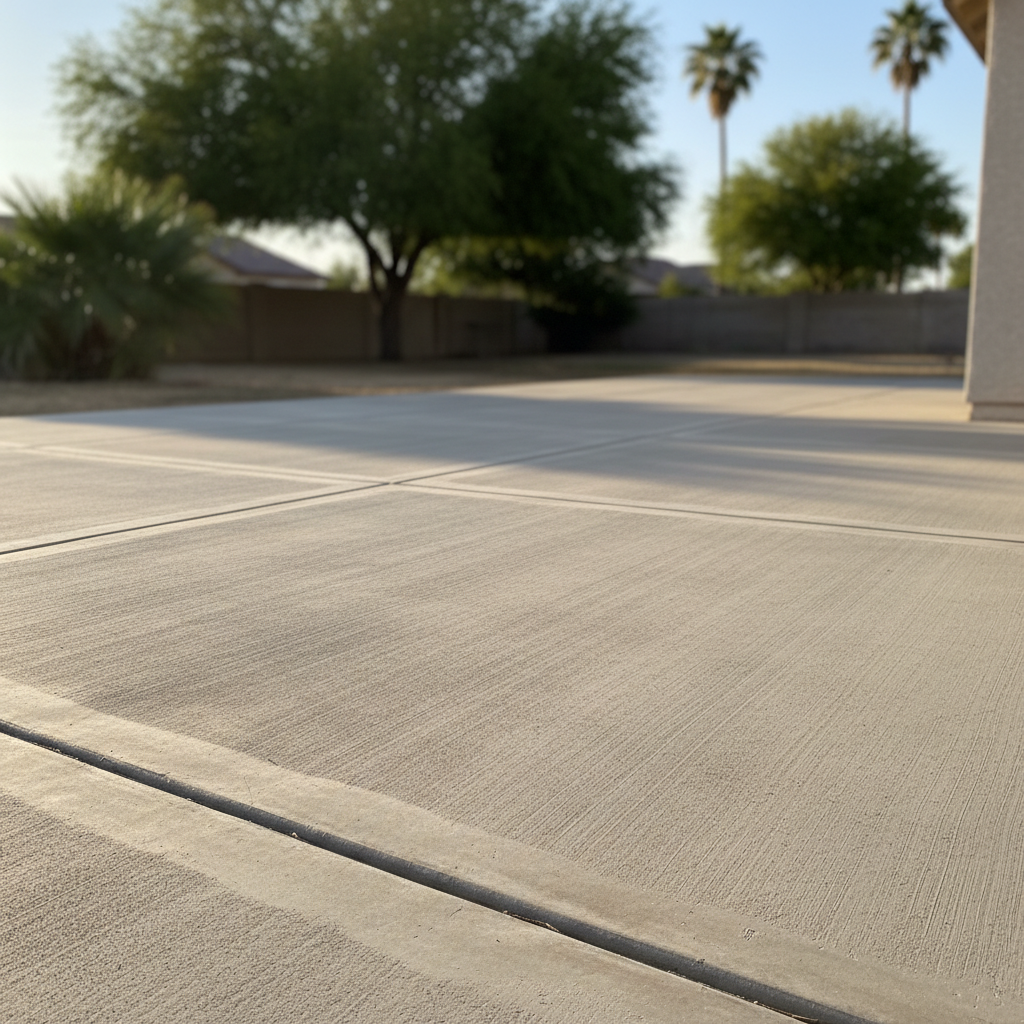
Thinking About Pouring Your Own Concrete? Read This First.
So, you're looking at that cracked patio or that spot in the yard where you want a new shed, and you're thinking, "I can pour some concrete myself." I get it. There's a satisfaction that comes from building something with your own hands. But before you rent a mixer and order a truckload of gravel, let's talk real talk about concrete flatwork for homeowners right here in Laveen Village.
Concrete flatwork, like patios, walkways, or small slabs, seems simple on the surface. Mix, pour, smooth, done. Right? Well, not exactly. There's a lot that goes into a durable, good-looking concrete job, especially with our Laveen soil, which can be pretty expansive and tricky if you don't prep it right.
Before You Even Think About Mixing
This is where most DIY projects go sideways. Proper preparation is 90% of a successful concrete pour. Here's what you need to consider:
Permits: For anything significant, especially if it's attached to your house or affects drainage, you might need a permit from the city of Phoenix. Don't skip this. Fines and having to tear out new work are no fun.
Digging & Grading: You need to excavate the area, usually 4-6 inches deep for a standard slab. Then, you've got to ensure proper drainage away from your house. This means a slight slope, typically 1/8 to 1/4 inch per foot. Getting this right by hand is tough work and crucial for preventing standing water.
Sub-base: After digging, you'll need a compacted layer of aggregate (like ABC gravel) about 2-4 inches thick. This provides a stable foundation and helps with drainage. You'll need a plate compactor for this, not just stomping on it. You can rent those.
Formwork: Building sturdy forms that hold the wet concrete's shape is key. They need to be straight, level, and strong enough not to bow out. Use stakes and screws, not just nails, to keep everything tight.
Reinforcement: For most flatwork, you'll want rebar or wire mesh. This helps prevent cracking. It needs to be supported so it's in the middle of the slab, not resting on the ground.
During the Pour: This is Where It Gets Fast
Once the concrete truck arrives (or you start mixing bags), you're on a clock. Concrete doesn't wait. You'll need:
Manpower: Unless it's a tiny 2x2 pad, you'll need help. Concrete is heavy, and you need to move it, spread it, and level it quickly.
Tools: Shovels, rakes, screed boards (a long, straight piece of lumber or metal), bull floats, hand floats, edgers, and groovers. Don't skimp on these. Renting them is usually the way to go.
Screeding and Floating: This is how you get the surface level and smooth. It takes practice to get it right without creating humps or dips. A bull float pushes down the aggregate and brings the cream to the surface. Hand floating follows.
Finishing: Once the water sheen disappears and the concrete starts to stiffen, you can do the final finish – a broom finish for traction, or a smooth troweled finish. This timing is critical; too early, and you'll just make a mess; too late, and it won't work.
After the Pour: Don't Forget to Cure It
You're not done when the concrete looks dry. Curing is essential for strength and durability. Keep the concrete moist for at least 7 days. You can do this by misting it with water, covering it with plastic sheeting, or using a curing compound. Skipping this step leads to weaker concrete that's more prone to cracking.
So, What Can You Realistically DIY?
For a homeowner with some grit and a willingness to learn, a very small, non-structural slab (think a pad for an AC unit or a small trash can enclosure) might be doable. We're talking something under 25-30 square feet, where you can mix bags of concrete yourself and manage the pour with one helper. Even then, getting the grade and finish perfect is a challenge.
Anything larger, or anything that's going to be a main feature like a patio, driveway, or a foundation for a significant structure? That's where you really need to call in a pro. The cost of renting equipment, buying materials, and the potential for a messed-up job that you have to tear out often outweighs the savings. Plus, a professional concrete contractor like Kingdom Concrete Laveen has the experience, the right tools, and the crew to get it done right, the first time. We know how to handle the heat, the soil, and all the little details that make a concrete job last for decades here in Laveen.
Don't be afraid to tackle small projects, but know your limits. Concrete is permanent, and a bad job is a permanent eyesore and a headache. When in doubt, get a few quotes. It might save you a lot of grief in the long run.