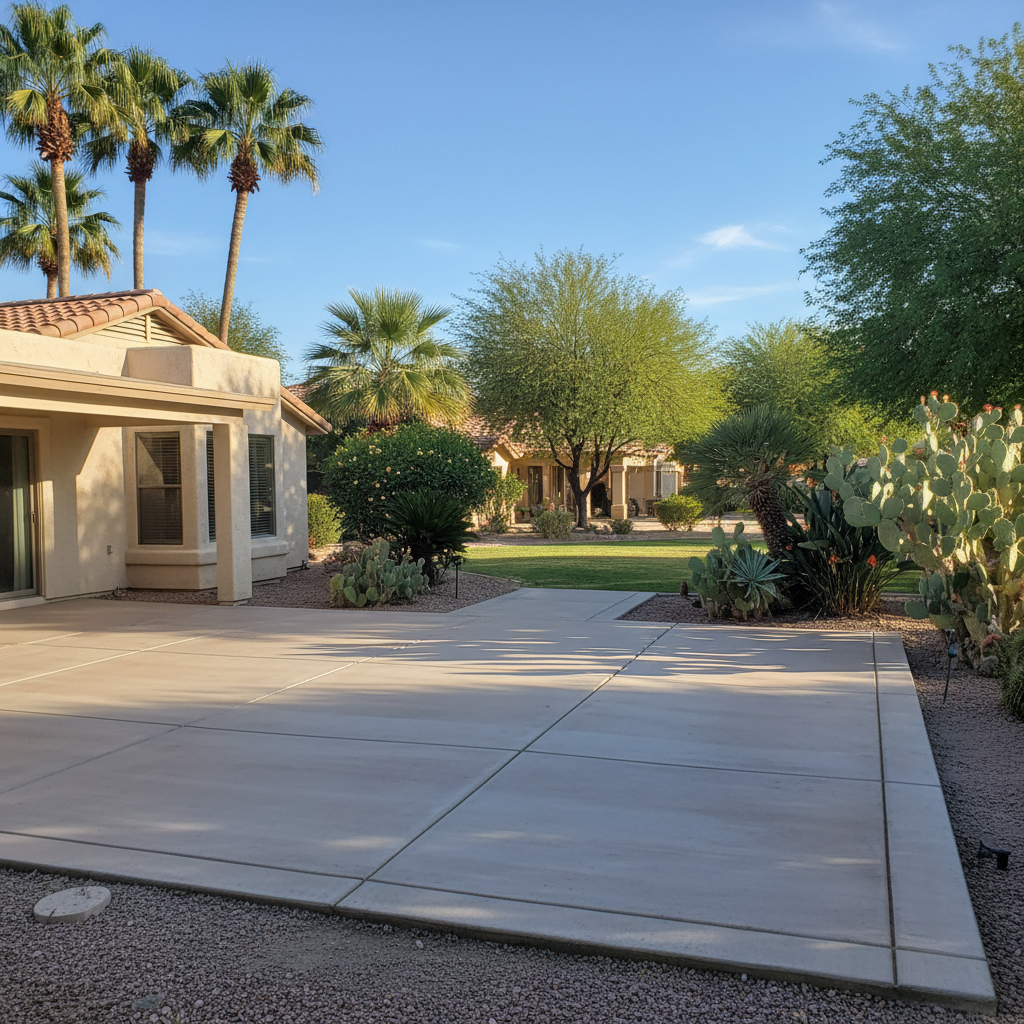
When's the best time to pour concrete here in Laveen? That's a question I hear all the time, and it's a fair one. We don't exactly have four gentle seasons like some places, do we? It's mostly hot, then hotter, and maybe a few weeks of "not bad." Our desert climate, with its blistering heat, sudden monsoon downpours, and even those surprising cold snaps, really dictates when you should schedule your concrete work if you want it to last.
Summer: The Heat is On (and Off)
Let's just be upfront about this: pouring concrete in the middle of a Laveen summer, when it's 115 degrees in the shade, isn't ideal. In fact, it can be pretty risky for the concrete's long-term strength and durability. When the air temperature gets that high, the water in the concrete mix just evaporates too quickly. This fast drying can lead to cracking, a weaker slab, and trust me, it makes the job much tougher for the crew trying to finish it properly. We're talking about plastic shrinkage cracking here, where the surface dries out way faster than the inside, putting a lot of stress on it.
Now, that doesn't mean we just shut down completely in July and August. What it means is we have to be smart about it. If we're doing a summer pour, we usually start super early, before the sun really starts beating down. We'll add special admixtures to slow down the set time, and we'll be ready to cure that concrete immediately. Curing is always critical, but especially in the heat. It's all about keeping moisture in the slab so it can gain strength the right way. We'll often suggest wet curing with burlap or ponding water, or using a good liquid curing compound. So, if you've got a big patio or driveway planned and you're thinking summer, be ready for us to suggest either waiting or planning for a really, really early start.
Fall & Spring: The Sweet Spot
If you ask me, late fall (think October, November) and early spring (March, April) are the absolute best times to get concrete work done around here. The temperatures usually hit that sweet spot – warm enough for the concrete to cure nicely without drying too fast, and cool enough that my crew isn't battling heatstroke. You'll generally get better results, and honestly, the whole process is less stressful for everyone involved. The concrete gets ample time to hydrate and gain strength at a steady pace, which means a stronger, more durable product for your home. Can't beat that.
We still have to watch out for those occasional windy days, though. Wind can dry out the surface of fresh concrete almost as fast as direct sun, so we'll put up windbreaks if we need to. And even in these milder months, proper curing is still non-negotiable. Don't think just because it's 75 degrees you can skip it. That's how you end up with problems down the road.
Winter: Don't Rule It Out
Winter in Laveen, from December through February, can actually be surprisingly good for concrete, especially if we avoid the coldest nights. While we don't often see freezing temperatures during the day, nights can definitely dip below freezing. Pouring concrete when temperatures are consistently below 40 degrees Fahrenheit can be tricky. The hydration process slows way down, and if the concrete freezes before it gains enough strength, it can be permanently damaged. We're talking about reduced strength and durability, and nobody wants that, right?
That said, if we have a stretch of mild winter days, it's perfectly fine. We'll still take precautions like using warmer water in the mix or covering the fresh concrete to protect it from cold snaps overnight. For smaller projects, winter can be a great time to get things done, especially if you're looking to avoid the busy spring rush. Just make sure your contractor, like us at Kingdom Concrete Laveen, knows how to handle cooler weather pours safely and effectively.
Monsoon Season: A Different Kind of Challenge
Ah, monsoon season. Usually late June through September. It's not just the heat we worry about then; it's those sudden, torrential downpours. You absolutely cannot pour concrete if there's a good chance of heavy rain. Rain will dilute the concrete mix, wash away the cement paste, and ruin the surface finish. It's a mess, and it's a waste of material and labor.
We keep a close eye on the weather forecast during these months. If a monsoon storm is brewing, we'll reschedule. It's always better to delay a day or two than to pour concrete that's going to be compromised by water. After a pour, once the concrete has started to set and can withstand a light rain, it's less of an issue, but we still prefer to keep it protected for the first 24 hours if possible.
Protecting Your Investment Year-Round
Once your concrete is installed, your job isn't quite over. Here's how to keep it looking good and lasting long:
- Curing is Key: I really can't stress this enough. For the first 7 days, keep that concrete moist. Whether you use wet burlap, a sprinkler, or a curing compound, proper curing makes a huge difference in strength and crack resistance.
- Seal It Up: After the initial curing period (usually 28 days for full strength), apply a good quality concrete sealer. This is especially important here in Laveen. A sealer protects against stains, enhances durability, and helps prevent surface spalling from our intense sun and temperature swings. Reapply every few years, depending on the product and how much traffic it gets.
- Clean Regularly: Sweep off dirt and debris. If you spill something, clean it up quickly, especially oils or chemicals. A pressure washer on a low setting can help with stubborn grime, but be careful not to damage the surface.
- Watch for Cracks: Concrete cracks. It's just a fact of life, especially with our expansive Laveen soils. Small hairline cracks are usually nothing to worry about. If you see larger, widening cracks, or significant settling, give us a call. We can assess if it's just cosmetic or something more serious that needs attention.
Ultimately, getting your concrete done right in Laveen means understanding our unique climate. Planning your project for the right time of year, and choosing a contractor like Kingdom Concrete Laveen who knows these local conditions inside and out, will ensure your new patio, driveway, or walkway stands strong for years to come.