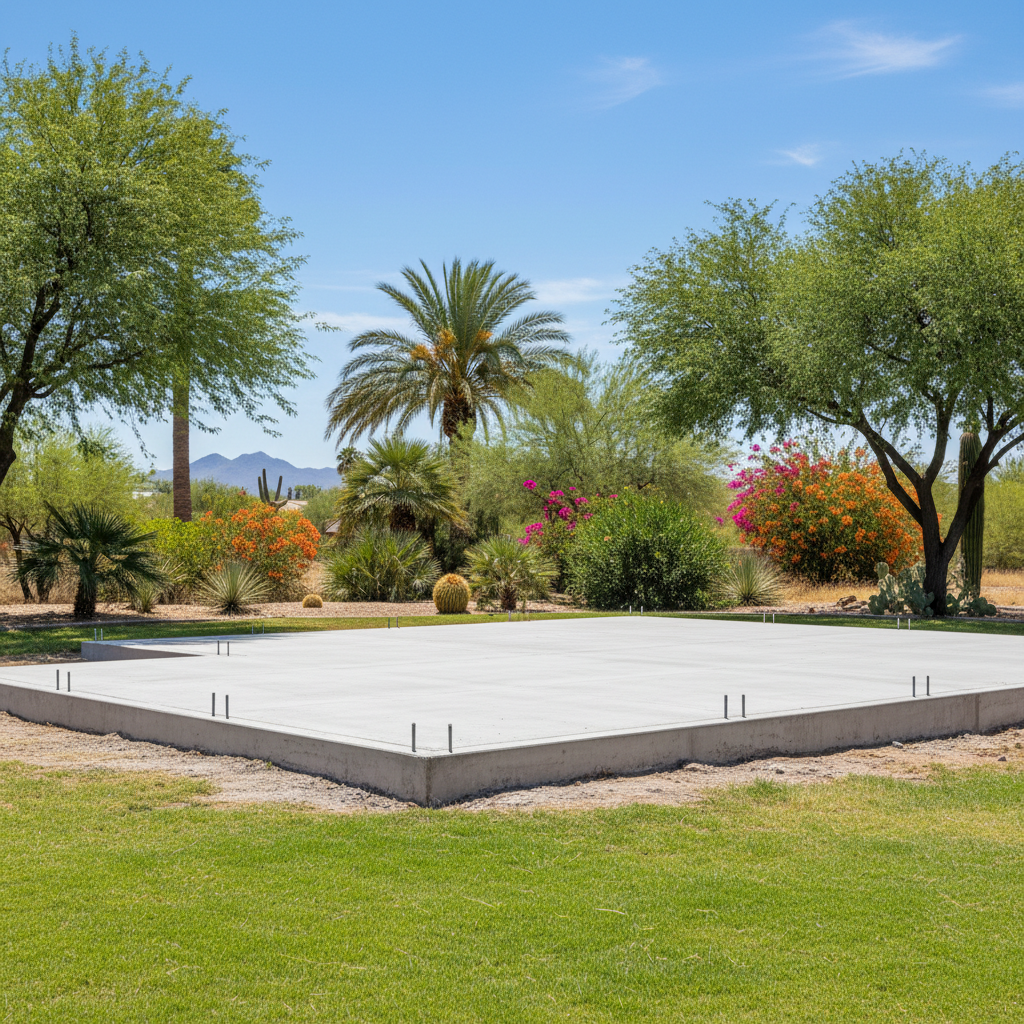
That desert sun cooking our yards out here in Laveen Village makes the heat very intense, and that heat punishes Concrete Foundations. If you have lived around here long enough down near the Loop 202 or out by Dobbins Road, you already know our caliche soil and extreme summer heat create a whole different set of rules for construction and home maintenance. A Concrete Foundation is not just a set-it-and-forget-it slab. Concrete breathes, concrete expands, and if you do not respect the weather patterns we get in the Valley, you are going to see cracks sooner rather than later.
Let us talk about what the local climate actually does to your Concrete Foundation. When summer temperatures regularly cross 110 degrees, fresh Concrete cures too fast. That rapid evaporation steals the moisture the mix desperately needs to achieve full strength, leading to shrinkage cracks and structural weak spots. That is why scheduling matters immensely. Kingdom Concrete Laveen always tells homeowners to plan major Concrete Foundation pours during the cooler shoulder months of late fall or early spring whenever possible. If you have to pour in July, you need specific admixtures and strict curing blankets to keep the moisture locked in.
Beat the Heat and Soil Shifting
Our native soil adds another layer of complexity. It is heavy, expansive clay mixed with caliche layers that swell when we actually get a decent monsoon downpour and shrink down to dust when it dries out. That constant movement puts immense pressure on foundation walls and slabs. Here is what you need to keep an eye on to protect your property:
- Walk your perimeter after heavy rains to check drainage. Standing water near your Concrete Foundation is a very serious problem.
- Keep your landscaping irrigation consistent. Letting the soil dry out completely on one side of the house causes differential settling.
- Seal surface cracks early before monsoon moisture seeps deep into the sub-base and rusts out your rebar.
Winter in Laveen is the best time for getting Concrete work done right. We do not get hard freezes like up north, but overnight winter lows can drop enough to slow down curing times in a manageable way. Pouring a Concrete Foundation or a slab in January gives the Concrete time to gain structural integrity at a natural, steady pace before the brutal summer heat returns.
Year-Round Maintenance Habits
You do not need a complicated maintenance routine to keep your Concrete healthy, but you do need consistency. Wash off the dust and debris every few months. Laveen dust gets kicked up constantly from nearby agricultural fields and new developments, and that fine silt holds heat against the surface. A simple pressure washing on a lower setting keeps things clean. More importantly, apply a breathable penetrating sealer every couple of years. This stops moisture from penetrating the porous surface and prevents salts from the soil from causing spalling.
Taking care of your Concrete Foundation requires paying attention to the unique environment we live in. By timing your projects right and staying ahead of drainage issues, Kingdom Concrete Laveen helps homeowners save thousands in structural repairs down the road.