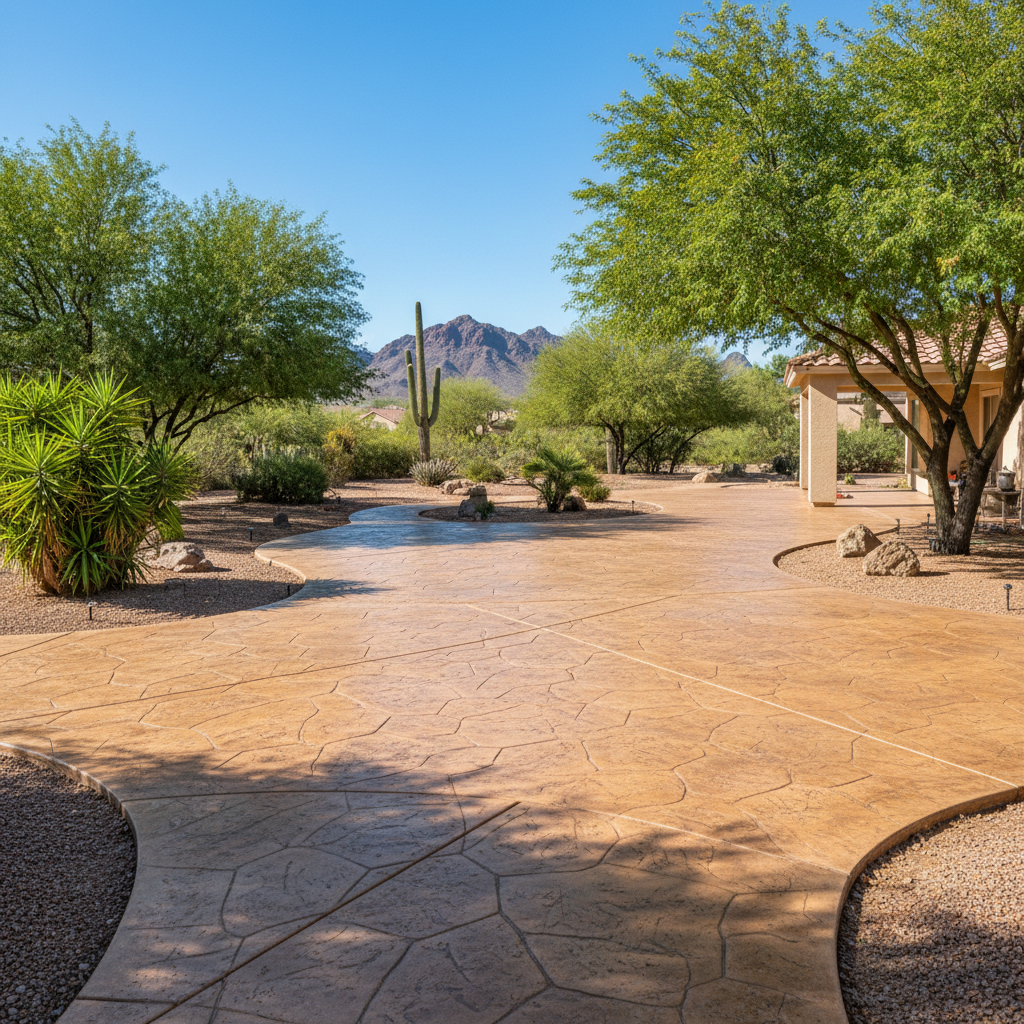
So, you're thinking about stamped concrete for your Laveen home? Awesome choice! It really spruces up a place and can totally change the look of a backyard. But before you dive in, let's chat about getting things ready. A smooth project always starts with good planning, and trust me, I've seen enough jobs to know what separates a big headache from a happy homeowner.
How Long Does a Stamped Concrete Project Usually Take?
Folks often ask me, "Exactly how long is this whole thing going to take?" It's a fair question, and the answer isn't always super simple, but I can definitely give you a good idea. From our first conversation until you're relaxing on your brand-new patio, here's a typical breakdown:
- First Chat & Quote (1-2 weeks): You give us a call, we come out, measure everything, talk designs, colors, patterns — the works! Then we send over a detailed quote. Sometimes we go back and forth a bit on design choices, which is totally normal.
- Getting on the Schedule (2-4 weeks out): Once you give us the green light, we'll get you penciled in. Good contractors tend to be booked a few weeks ahead, especially during our nicer fall and spring seasons here in Laveen.
- Permits (If you need 'em, 2-6 weeks): If it's a bigger project, or if you're adding something structural like a retaining wall with your concrete, you might need a city permit. We'll help you figure that out, but the timing can really vary.
- The Actual Work (3 days - 2 weeks): This is when we get our hands dirty. A small patio might wrap up in 3 to 5 days. A bigger driveway or a complex, multi-area job could stretch up to two weeks. This covers everything: prep, pouring, stamping, curing, and sealing.
- Curing Time (7-28 days): The concrete needs to set up right. You can usually walk on it after a day or two, but don't drive on it or put heavy furniture out for at least a week — and ideally, give it 28 days to reach its full strength. We'll give you all the specific instructions you'll need.
So, from start to finish, you're looking at anywhere from about a month to three months. It really depends on the project's size and whether permits are involved. Patience, especially with concrete, is a virtue!
What Happens During the Stamped Concrete Process?
Once we're on site, here's how things generally go:
- Tear-out & Digging: If there's old concrete or just dirt that needs to go, we'll break it up and haul it away. Then we dig out and level the area to the right depth and slope for proper drainage. Yeah, this part can be dusty and noisy.
- Base Prep: We lay down and compact a gravel base. This step is super important for stability and for keeping cracks from showing up later, especially with some of the expansive clay soils we sometimes run into around here.
- Forms & Rebar: We set up the wooden or metal forms that create the edges of your concrete. Then we put steel rebar or wire mesh inside these forms to give the concrete extra strength.
- Pouring & Finishing: The concrete truck rolls up, and we pour the concrete. This is where the magic really starts. We float, trowel, and color the surface just right.
- Stamping: This is the fun part! While the concrete is still wet but firm enough, we put down release agents and then press big, flexible mats (the stamps, obviously) into the surface. This creates the pattern and texture you picked out.
- Curing & Sealing: After the concrete has cured for a few days, we'll clean off any extra release agent and put on a high-quality sealer. This protects your concrete, makes the colors pop, and generally makes it easier to keep clean.
We'll always keep you in the loop about our progress and if there are any potential delays. Communication is a big deal to us here at Kingdom Concrete Laveen.
How to Get Your Home Ready for the Project
You can do a few things to make our job easier — and your life less stressful, honestly:
- Clear the Area: Move any patio furniture, grills, planters, toys, or anything else out of the work zone. We need a clear path for our equipment and materials.
- Access: Make sure we can easily get to the work area. If we need to bring a bobcat or concrete buggy into your backyard, check that gates are wide enough and there aren't any obstacles in the way.
- Sprinklers & Utilities: Mark any sprinkler heads, low-voltage lighting wires, or shallow utility lines in the work area. We'll be digging, and we definitely don't want to hit anything important.
- Pets & Kids: Keep pets and children away from the construction zone. It's for their safety and ours. Concrete work involves heavy equipment, wet concrete, and chemicals.
- Water Access: We'll need access to an outdoor water spigot.
- Expect Some Dust & Noise: There's just no getting around it. Breaking up concrete, digging, and pouring will create dust and noise. Do yourself a favor and close your windows, especially on windy days.
Important Questions to Ask Before Signing a Contract
Before you commit, make sure you feel good about your contractor. Here are some questions I always recommend asking:
- "Can I see your license and insurance?" Always ask. A good contractor will have both ready.
- "How long have you been doing stamped concrete specifically?" General concrete experience is great, but stamped concrete is kind of an art. You want someone who really knows their stuff in this specific area.
- "What's all included in the price?" Get a detailed breakdown. Does it cover demolition, digging, materials, labor, sealing, and cleanup? Are there any hidden costs I should know about?
- "What kind of base do you use, and how do you prepare it?" This is super important for how long your concrete will last, especially with our Laveen heat and those occasional heavy rains.
- "What type of sealer do you use, and what's the upkeep like?" Good sealers protect your investment. Understand how often you'll need to re-seal it.
- "Do you offer a warranty on your work?" A good contractor stands behind what they do.
- "Can you give me some references or show me local projects you've done?" Seeing their work in person is truly invaluable, don't you think?
- "What's your payment schedule?" Usually, there's an upfront deposit, then payments as the work progresses, and a final payment when it's all done. Be wary of anyone who asks for half or more upfront.
Choosing the right contractor and being prepared yourself will truly make all the difference. We really take pride in our work here at Kingdom Concrete Laveen, and we want you to be absolutely thrilled with your new stamped concrete. If you've got more questions, please don't hesitate to ask!